
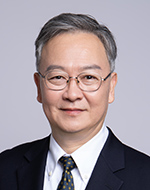
Prof. Mo-Yuen Chow, IEEE Life Fellow
Professor, Global College, Shanghai Jiao Tong University; Emeritus Professor, North Carolina State University, USA
Mo-Yuen Chow (Fellow, IEEE) received the B.S. degree in electrical and computer engineering from the University of Wisconsin-Madison, USA in 1982, the M.Eng. and Ph.D. degrees in electrical and computer engineering from Cornell University, USA, 1983 and 1987, respectively. He is a Professor in the Global College, Shanghai Jiao Tong University, and an Emeritus Professor in the Department of Electrical and Computer Engineering, North Carolina State University, USA. He was a Visiting Changjiang Scholar at Zhejiang University. His recent research includes distributed control and management, smart micro-grids, batteries management, and mechatronics systems.
Dr. Chow has established the Advanced Diagnosis, Automation, and Control Laboratory. He is the Co-Editor-in-Chief of IEEE Transactions on Industrial Informatics, 2014–2018, Editor-in-Chief of IEEE Transactions on Industrial Electronics, 2010–2012. He has received the IEEE Region-3 Joseph M. Biedenbach Outstanding Engineering Educator Award, the IEEE ENCS Outstanding Engineering Educator Award, the IEEE ENCS Service Award, the IEEE Industrial Electronics Society Anthony J. Hornfeck Service Award, and the IEEE Industrial Electronics Society Dr.-Ing. Eugene Mittelmann Achievement Award. He is a Distinguished Lecturer of IEEE Industrial Electronics Society.
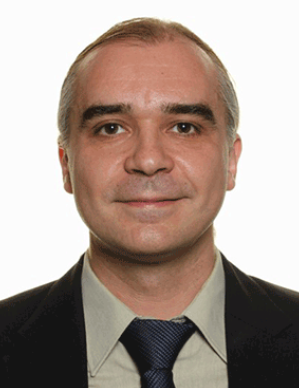
Prof. Josep M. Guerrero, IEEE Fellow
Professor, AAU Energy, Aalborg University, Denmark; Founder & Director, Center for Research on Microgrids (CROM); Director, Center for Renewable Energy and Microgrids, Huanjiang Laboratory, Zhejiang University
Josep M. Guerrero (IEEE FELLOW) received the B.Sc. degree in telecom engineering, M.Sc. degree in electronics engineering, and PhD degree from the Technical University of Catalonia, Barcelona, Spain.
Since 2011, he has been a Full Professor with AAU Energy, Aalborg University, Denmark, where he is responsible for the Microgrid Research Program. From 2019, he became a Villum Investigator by the Villum Fonden, which supports the Center for Research on Microgrids (CROM) at Aalborg University, being Prof. Guerrero the founder and Director of the same center (www.crom.energy.aau.dk). In 2020, he initiated neuroscience studies and research. As a result, in 2022 he received the M.Sc. degree in Psychobiology and Cognitive Neuroscience from the Institute of Neuroscience (INc) at the Autonomous University of Barcelona, and in 2023 he received the M.Sc. degree in Sleep: Physiology and Medicine at the University of Murcia, Spain. From 2023 to 2024 he was with the Technical University of Catalonia as an ICREA Research Professor. In 2023 he joined Huanjiang Laboratory as a director of the Center for Renewable Energy and Microgrids, Zhejiang University, Zhuji, Shaoxing, China. In 2025 he became a Distinguished Senior Researcher at the department of electrical engineering, University of Valladolid, Spain.
His research interests are oriented to different microgrid frameworks like energy microgrids, hydrogen and biomass, water micronets, biological systems, seaport microgrids and electrical ships, airport microgrids and more electrical aircrafts, space microgrids and smart medical systems. In these fields, he has been researched distributed and cyber-physical energy systems, cybersecurity for microgrids and smart grids, neuroscience-inspired artificial intelligence for energy systems, machine learning and applications using signal processing, bioinformatics, bio-inspired computing, and quantum computing and quantum communication for complex energy networks.
Prof. Guerrero is an Associate Editor for several IEEE TRANSACTIONS. He has published more than 1,200 journal papers in the fields of microgrids and renewable energy systems, which are cited more than 120,000 times. During nine consecutive years, from 2014 to 2023, he was awarded by Clarivate Analytics as Highly Cited Researcher. From 2020 to 2024 he was listed as the world’s top 2% scientist by Stanford/Elsevier. In 2021, he received the IEEE Bimal Bose Award for Industrial Electronics Applications in Energy Systems, for his pioneering contributions to renewable energy based microgrids. In 2022, he received the IEEE PES Douglas M. Staszesky Distribution Automation Award, for contributions to making the hierarchical control of microgrid systems a practical reality. In 2023, he was the IEEE Modeling and Control Technical Achievement Award recipient for contributions to modelling and control of power electronics based microgrids. In 2024 he received the CSEE Journal of Power and Energy Systems Excellent Paper Award.
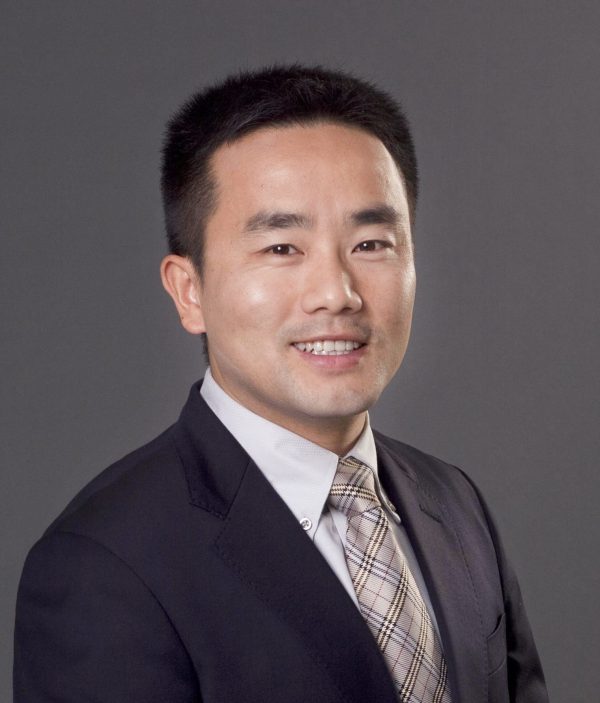
Prof. Chengbin Ma, IEEE Fellow
Tenured Professor in Electrical and Computer Engineering, UM-SJTU Joint Institute; Joint Professor in the Department of Automation, School of Electronic Information and Electrical Engineering, Shanghai Jiao Tong University
Prof. Ma received his Ph.D. in Electrical Engineering from the University of Tokyo, Japan, in September 2004. His research interests include energy storage systems, batteries and energy management, wireless power transfer, and their broad applications in electronic devices, electric vehicles, microgrids, and smart grids. He currently serves as Vice Chair of the Wireless Power Transfer Committee of the China Electrotechnical Society, Chair of the IEEE Industrial Electronics Society (IES) Shanghai Chapter, and Associate Editor of the IEEE Journal of Emerging and Selected Topics in Industrial Electronics. He served as General Chair of the 2023 IEEE International Conference on Industrial Electronics for Sustainable Energy Systems (IESES), Academic Chair of the 2022 International Conference on Wireless Power Transfer, the inaugural Energy Cluster Representative of the IEEE IES (2019–2020), and Associate Editor of the IEEE Transactions on Industrial Informatics (2016–2022). He has received the 7th “Kaiyuan Top Ten Outstanding Teachers” Award of Shanghai Jiao Tong University, the AirFuel Alliance Distinguished Research Award (2019, USA), and the first prize in the Basic Research category of the 10th Science and Technology Progress Award of the China Power Supply Society. He has been listed in Stanford University’s World’s Top 2% Scientists rankings for 2020–2024 (both the “Career-long Impact” and “Annual Impact” lists), and ranks first worldwide in both the “Total Local Citation Score” and “Total Global Citation Score” for high-frequency wireless power transfer in the Web of Science core collection. Under his supervision, his research teams and students have received the 4th “Kaiyuan Top Ten Research Teams” Award of Shanghai Jiao Tong University and the inaugural “Top Ten Academic Stars” title (ranked first) in 2016. He has supervised 13 Ph.D. graduates (5 of whom hold faculty positions) and 18 master’s graduates.
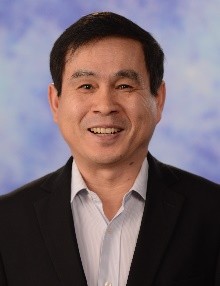
Prof. Liqiu Wang
The Hong Kong Polytechnic University, Kowloon, Hong Kong
Otto Poon Charitable Foundation Endowed Professor in Smart and Sustainable Energy; Chair Professor of Thermal-Fluid and Energy Engineering; Director of PolyU-Zibo Technology and Innovation Research Institute
Professor Liqiu Wang holds the Otto Poon Charitable Foundation Endowed Professor in Smart and Sustainable Energy, and is a Chair Professor of Thermal-Fluid and Energy Engineering at The Hong Kong Polytechnic University. He also serves as Director of the PolyU-Zibo Technology and Innovation Research Institute.
With over three decades of research at the crossroads of thermal fluid science, biomedical engineering, micro- and nano-technology, energy systems, and advanced manufacturing, Professor Wang is a truly interdisciplinary pioneer. His prolific output includes more than 590 peer-reviewed papers, among which over 60 appear in top-tier journals such as Nature, Science, PNAS, and Physical Review Letters. He is also author of 11 scholarly books and holds over 40 granted patents.
His work has earned global recognition: he is a Clarivate Highly Cited Researcher (top 1% worldwide) and has been listed in Stanford University’s World’s Top 2% Scientists. With over 28,000 citations and an h-index of 75, his influence spans both academia and industry. He is a recipient of the Optica Innovation Award, the Global Tech Innovation Award, and multiple gold and silver medals at the International Exhibition of Inventions of Geneva.
Professor Wang serves on the editorial boards of more than 30 international journals, has founded and chaired numerous major conferences, and delivered over 100 plenary or keynote lectures across the globe. He also advises governments and industrial partners on strategic research directions – bridging the gap between fundamental science and societal impact.
Speech title: Heat Transfer with Thermal Waves and Resonance
Abstract: As humanity transitions from an era of abundant fossil fuels to one defined by pressing energy sustainability challenges, the efficient management and transfer of heat have emerged as critical imperatives. Over 80% of global energy production involves the generation, conversion, or utilization of heat, underscoring the urgent need to engineer advanced thermal transport media capable of addressing the terawatt-scale demands of the future.
Among the four fundamental heat-transfer modes—conduction, convection, radiation, and thermal wave/resonance—the latter stands apart due to its unique mechanism and transformative potential. Unlike conventional modes, which rely on temperature gradients to drive heat unidirectionally from high- to low-temperature regions, thermal wave/resonance arises from cross-coupling between transport processes within a medium. This enables isothermal heat transfer or even heat propagation against thermal gradients, offering unprecedented control over energy flow. Characterized by spatiotemporal wave-like distributions of temperature or its derivatives, this mode exhibits tunable dynamics that can be optimized through tailored cross-coupling, granting it superior efficiency in specific applications compared to traditional methods.
This presentation delves into the origins and manipulation of thermal waves and resonance, highlighting their capacity to revolutionize heat-transfer systems. Experimental demonstrations of their unique features—such as enhanced thermal conductivity, directional control, and non-diffusive energy transport—will be showcased to illustrate their practical advantages. Additionally, the talk will address the complexities inherent in numerically simulating these phenomena, including challenges in modeling wave interference, resonance tuning, and multi-physics interactions. By bridging theoretical insights, experimental validations, and computational hurdles, this work aims to advance the development of next-generation thermal management technologies, paving the way for sustainable solutions to humanity’s escalating energy demands.